





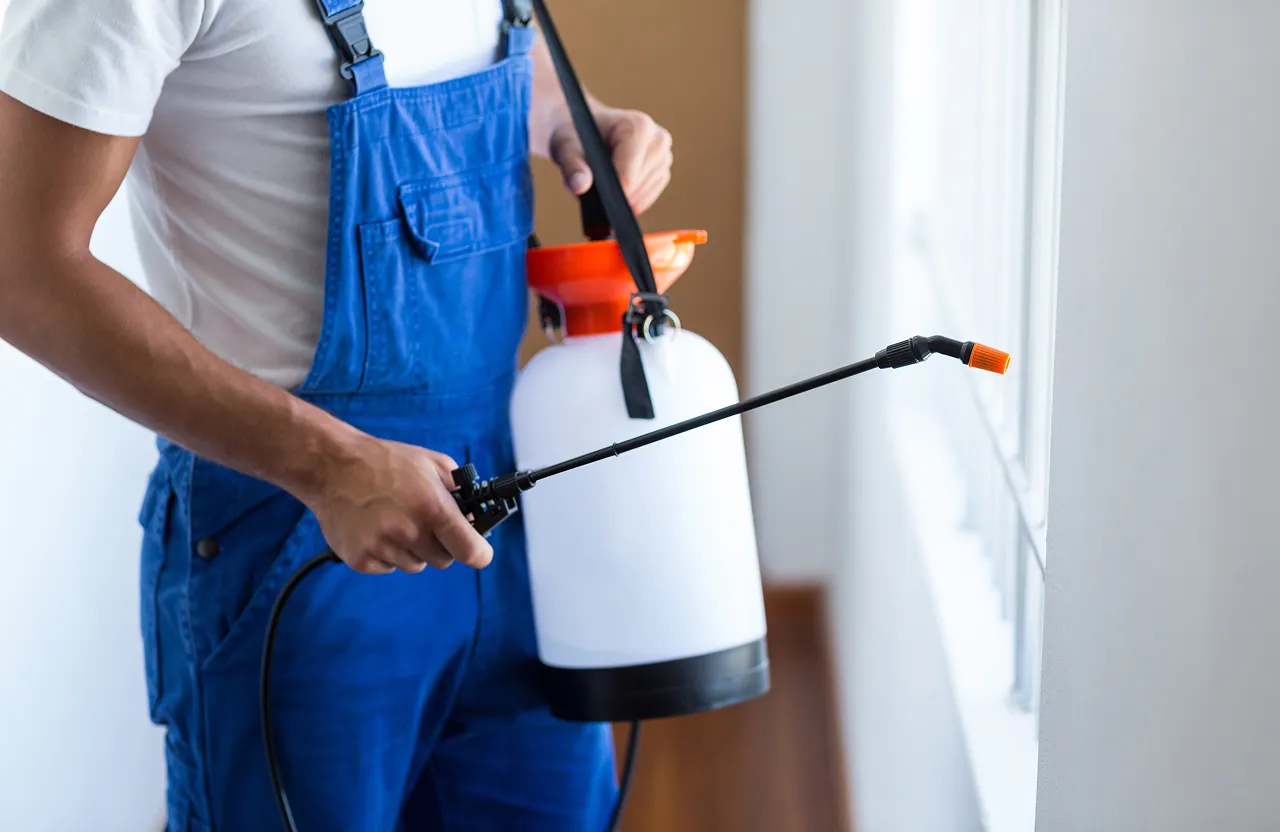
Handling pests in a rental property takes more than an exterminator’s phone number. At 1836 Property Management, we’ve helped Austin-area rental owners since 2006 and now manage more than 900 homes across Central Texas. Our team coordinates resident maintenance requests, vendors, and repairs. In our experience, the best starting point is to separate two questions: what needs to happen now, and who ultimately pays?
First, confirm the pest and assess the problem. Then review the cause, lease, and local requirements before assigning costs. This guide explains those decisions, while our free Pest Response Checklist provides the practical steps and a fillable incident log.
Rental Property Pest Response Checklist: Free Downloadable PDF
Fill out the form below to instantly download our rental property pest response checklist.
The interactive PDF includes a quick-response sheet, resident questions and sample message, pest-identification reference, vendor checks, and a fillable incident log. It also covers follow-up, property corrections, and official Texas resources. Click the boxes on screen or print a copy for your property file.
What Should You Do When a Resident Reports Pests?
Acknowledge the report and ask for clear photos, the location, and when activity started. Also ask whether the resident has already used sprays, powders, traps, or foggers. That information helps the professional plan the inspection without working around an unknown treatment.
Next, explain what happens next. A proposed inspection date is more useful than “we’re looking into it.” Coordinate access under the lease and applicable requirements, and keep a written record of the report and your response.
We recommend a faster assessment for indoor rodents, suspected bed bugs, termite signs, or stinging insects near occupied areas. Keep residents away from gnawed wiring, active nests, and contaminated areas.
Do not let a billing disagreement delay assessment of a serious problem. You can investigate responsibility while arranging the work needed to protect residents and the property.
Who Is Responsible for Pest Control in a Rental Property?
Responsibility depends on the condition, its cause, the lease, and local requirements. A routine service agreement and an infestation affecting health or safety are not the same issue.
Under Texas Property Code Section 92.052, landlords generally must make a diligent effort to repair conditions that materially affect an ordinary tenant’s physical health or safety. The law includes notice requirements and requires rent to be current when notice is given. It also treats resident-caused conditions differently from normal wear and tear.
The Texas Attorney General’s repair guidance explains these duties. A pest clause should be read alongside them, not treated as the entire answer.
Local rules matter, too. The City of Austin’s rodent guidance states that city code requires landlords to maintain rentals free from rodent or insect infestations. Check the requirements for the property’s actual address before assigning responsibility.
How 1836 Approaches Pest-Control Costs
Our pest-control responsibility guidelines distinguish initial treatment and sealing from pest issues that develop later. They generally assign ordinary pest control during a single-family tenancy to the resident, with exceptions for wood-destroying insects and certain wildlife. Shared-wall properties may involve the owner or HOA.
Those are management guidelines, not a substitute for the current lease or applicable law. A report after move-in does not, by itself, prove resident responsibility.
For example, rodents entering through a damaged exterior opening raise a different question from an infestation linked to documented food waste. Ask the vendor to identify contributing conditions, not simply name the pest. Our maintenance expectations for owners explain how we assess maintenance needs and coordinate repairs.
How Quickly Does a Texas Landlord Need to Respond?
Texas does not give every pest report the same fixed deadline. For qualifying repair requests, Section 92.056 generally presumes seven days is a reasonable time after notice. That presumption can change based on the condition’s severity and the availability of labor and materials.
Seven days is not a waiting period or a guarantee that every problem can wait that long. The required response depends on the facts and the legal duty involved.
Record when notice arrived and begin assessing the issue promptly. Even when the first report comes by phone, request written details for your records rather than putting the matter on hold.
Which Austin Pest Problems Need Special Attention?
Identification matters because treatment, repairs, and follow-up differ by pest. An occasional outdoor insect entering the house is not automatically the same as an established indoor infestation.
| Pest concern | What rental owners should know |
|---|---|
| Cockroaches | Ask whether the species is breeding indoors or entering from outside. The control approach can differ. |
| Ants and fire ants | Location matters. Activity near paths, play areas, or electrical equipment needs a different assessment from an isolated mound away from people. |
| Mice and rats | Treatment may need to include safe cleanup and entry-point repairs, not just traps. |
| Bed bugs | Confirm physical evidence. Bites alone are not enough to identify an infestation. |
| Termites | Mud tubes, discarded wings, or unexplained wood damage warrant a termite inspection. |
| Wasps and other stinging insects | Hidden nests and nests near occupied areas call for professional assessment. |
These distinctions also guide the pest-identification reference in the downloadable checklist.
Texas A\&M AgriLife notes that termite swarms are most often seen from February through May in Texas. However, termites in a yard do not automatically mean the house needs treatment. Its termite inspection guidance explains why confirming activity at the structure matters.
For fire ants, weather and active foraging affect treatment timing. Ask the vendor when to treat and recheck rather than assuming one lawn treatment ends the issue.
Scorpions and wildlife need their own assessment, too. Do not assume a general insect treatment will solve an animal entering an attic or wall.
When Should You Hire a Pest-Control Professional?
We recommend professional help for suspected termites or bed bugs, indoor rodents, recurring infestations, hidden nests, and problems beyond routine maintenance. The same applies when treatment has failed or the pest cannot be identified.
Before hiring, check the business and relevant individual credentials through the Texas Department of Agriculture’s structural pest-control license records. Texas licenses structural pest-control work, with separate categories for work such as general pest control and termite control.
Compare the full scope, not just the first-visit price. Ask whether the proposal includes return visits, monitoring, cleanup, and sealing entry points. Have the vendor explain preparation and re-entry instructions before the appointment.
At 1836, we coordinate maintenance through a trusted vendor network. Our role is to connect the resident, service provider, and any related repair work so the owner is not managing each task separately.
Rodent Cleanup Is Not Ordinary Housekeeping
Do not sweep or vacuum dry rodent droppings. Texas DSHS guidance calls for ventilation, protective equipment, and wetting contaminated materials with disinfectant before removal. Heavy contamination may require specialized protection. Share the complete guidance or arrange qualified cleanup rather than asking a resident to sweep it up.
Why Pests Can Return After Treatment
A completed service visit does not always mean the problem is resolved. Treatment may leave another task open, such as repairing a leak, sealing an entry point, or removing a food source.
The EPA’s integrated pest management approach combines identification, monitoring, prevention, and targeted control. That is why we recommend discussing repairs and treatment together rather than treating them as separate problems.
After service, confirm who will complete each repair and when the vendor will return. Ask what signs the resident should report and how success will be measured. Save those findings with the original report and invoices.
Our guide to preventative maintenance for rental properties covers the broader property-care routine. For this incident, focus first on correcting the conditions connected to the confirmed pest activity.
Frequently Asked Questions
Can I Charge the Resident for Pest Control?
Possibly, depending on the lease, cause, and applicable law. Document the findings before billing. A report made after move-in, a pet in the home, or a clean move-in inspection does not settle responsibility on its own. Get legal guidance when the charge is disputed.
Are Landlords Responsible for Rodent Control?
The answer depends on the condition, lease, cause, and local rules. Rodent activity can involve both pest control and building repairs. Investigate entry points and other contributing conditions rather than assuming the resident’s housekeeping caused the problem.
Does a Pest Sighting Mean the Whole Property Needs Treatment?
Not necessarily. Identification and inspection should guide the scope. In attached housing, nearby units may need evaluation, but that is not the same as automatically treating every unit. Ask the pest professional what the evidence supports.
What If the Resident Has Already Used a Bug Bomb or Spray?
Ask for the product name, when it was used, and where it was applied. Share that information with the pest professional before inspection. Advise the resident not to add further treatments unless directed, and have everyone follow the product’s safety instructions.
Less Time Managing. More Time Living.
Pest problems involve more than treatment. Someone needs to coordinate resident communication, access, vendors, repairs, and follow-up.
1836 Property Management helps Austin and Central Texas owners handle those moving parts. Explore our Austin property management services to see how maintenance coordination fits into full-service management, or speak with our team about your rental.
This article provides general information, not legal, medical, or pesticide-application advice. Responsibilities depend on the property, lease, cause, and applicable requirements. Follow product labels and qualified professional guidance.