





Key Takeaways
- Make-readies go faster when one team runs them. In 2025, our onboarding make-readies took 13 to 18 days, compared with 24 to 30 days when an owner or outside project manager was involved.
- Every empty day costs money. Mortgage, taxes, utilities and lost rent typically add up to $100 or more per day, so saving a little on a repair rarely pays off if it adds a week of vacancy.
- Texas law sets some make-ready rules. Landlords must rekey by the seventh day after a new tenant moves in and install the required security devices and smoke alarms. Inside Austin city limits, homes with gas appliances or an attached garage also need carbon monoxide alarms.
- Skip the full kitchen remodel. Clean, working appliances, painted cabinets and new hardware go further. If you spend real money anywhere, put it into durable countertops.
- Paint and flooring are the biggest costs. Neutral white or off-white paint and glue-down luxury vinyl plank, which lasts 15 to 20 years, hold up best between tenants.
- Document the home before move-in. Photos, a walkthrough with the tenant and a three-day window to report issues make it easier to tell wear and tear from damage at move-out.
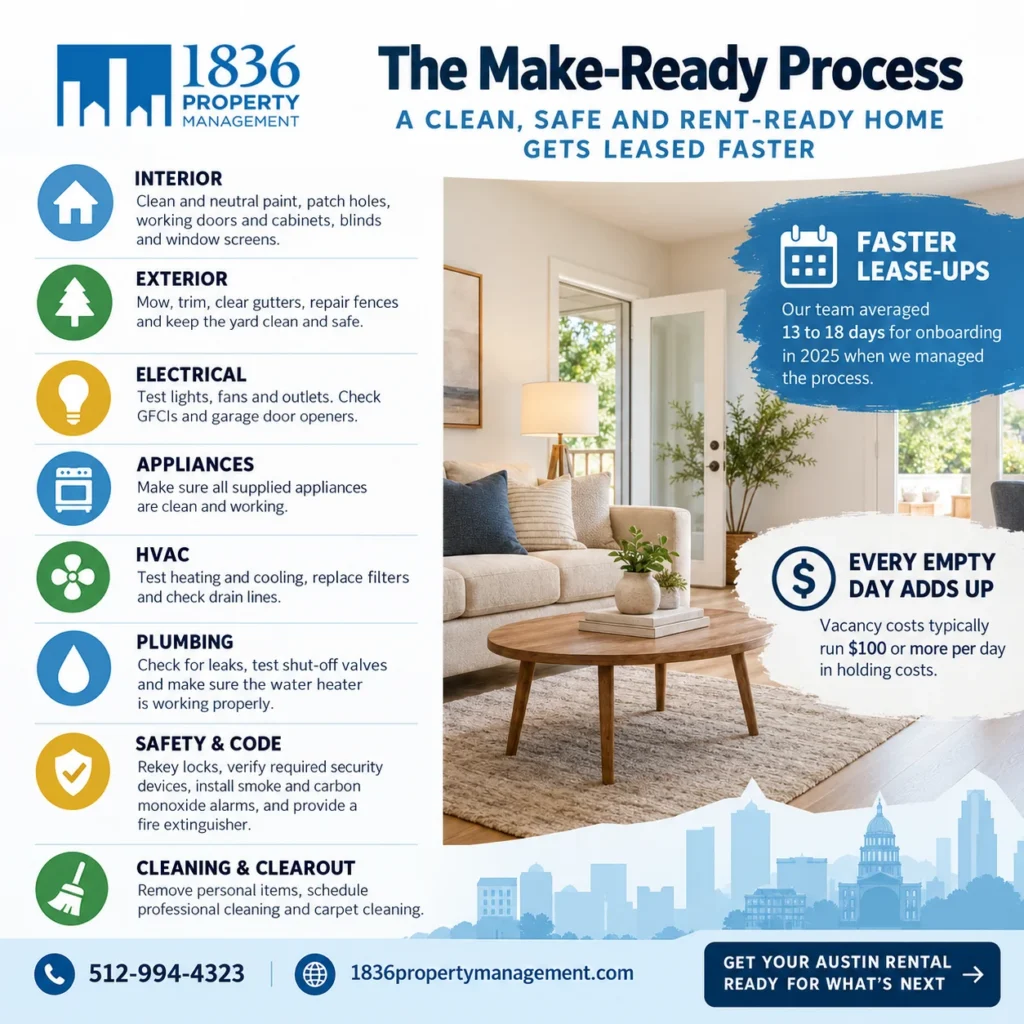
Getting a rental property ready for its next tenant takes more than a fresh coat of paint and a thorough cleaning. The make-ready process includes repairs, safety checks, and other work needed to get a home ready to rent. At 1836 Property Management, we’ve managed Austin rentals since 2006, and we’ve seen how delays during this process can add up. In 2025, our team averaged 13 to 18 days for onboarding when we managed the process from start to finish. With vacancy costs often reaching $100 or more per day, having a clear plan can save owners time and money. Here’s what to check, what to repair, and which upgrades are worth the investment.
Table of Contents
- The Make-Ready Checklist We Use on Every Austin Rental
- What Texas Law Requires Before a Tenant Moves In
- How the Make-Ready Process Changes After the First Tenant
- Rental Property Renovations Worth Doing During a Make-Ready
- How Long a Make-Ready Takes and What It Costs
- Move-In Day: Photos, a Walkthrough and a Three-Day Window
- Make-Ready Process FAQs
- Let Us Run Your Next Make-Ready
The Make-Ready Checklist We Use on Every Austin Rental
Use this make-ready checklist before every new lease. Think of it as a rent ready checklist: once every box is ticked, the home is ready for photos. Each item follows our full make-ready standards.
Interior
- ☐Walls clean and painted a neutral white or off-white
- ☐Holes bigger than a penny nail filled and textured
- ☐Shelves, TV mounts and curtain rods removed, with holes patched
- ☐2-inch blinds and a screen on every exterior window
- ☐A stopper behind every door
- ☐Doors and cabinets that open and close properly
Exterior
- ☐Lawn mowed and edged, with beds weeded and mulched
- ☐Shrubs trimmed to the bottom of the windows
- ☐Lower tree limbs trimmed to 6 feet on small trees and 7 feet on large ones
- ☐Plants at least 2 inches below the roof line and 4 inches off the siding
- ☐Roof, gutters and dryer vent clear, with no leaks or nests
- ☐Fence and gates intact, with grills and playscapes removed
Electrical
- ☐Every light, bulb and ceiling fan working, with no wobbling fans
- ☐Outlets and switches covered, with no exposed wiring
- ☐GFCI outlets in kitchens, baths and other wet areas
- ☐Garage door opener working, with one remote per parking spot
- ☐Security cameras removed and video doorbells reset
Appliances
- ☐A working refrigerator, washer and dryer, which our standards require in every home
- ☐Range, oven and hood vent clean, with every burner working
- ☐Dishwasher that drains and latches, with no rust
- ☐Disposal, microwave and exhaust fans working, if the home has them
HVAC
- ☐AC blowing air 15 to 20 degrees cooler than the room
- ☐A new air filter on move-in day
- ☐AC drain lines clear, with float switches installed
- ☐Outdoor unit level and clear of plants
Plumbing
- ☐Water heater working with no leaks, ideally with a drain pan
- ☐Sinks, tubs and showers draining freely with no leaks
- ☐Fresh caulk, solid grout and no mildew
- ☐Shut-off valves at sinks and toilets working
- ☐Main water shut-off located and working
Code items
- ☐Locks rekeyed for each new tenant
- ☐Door viewers on exterior doors, including the door into the garage
- ☐Pin locks on sliding glass doors
- ☐Smoke alarms in each bedroom, outside sleeping areas and on each level
- ☐Carbon monoxide alarms if the home has gas or an attached garage
- ☐A working fire extinguisher, ideally under the kitchen sink
Cleaning and personal property
- ☐Professional cleaning and carpet cleaning, with receipts
- ☐Owner belongings removed from the attic, garage and shed, with any tenant leftovers handled under the lease
- ☐No bugs, hair or dust on cabinet tops, light fixtures or porches
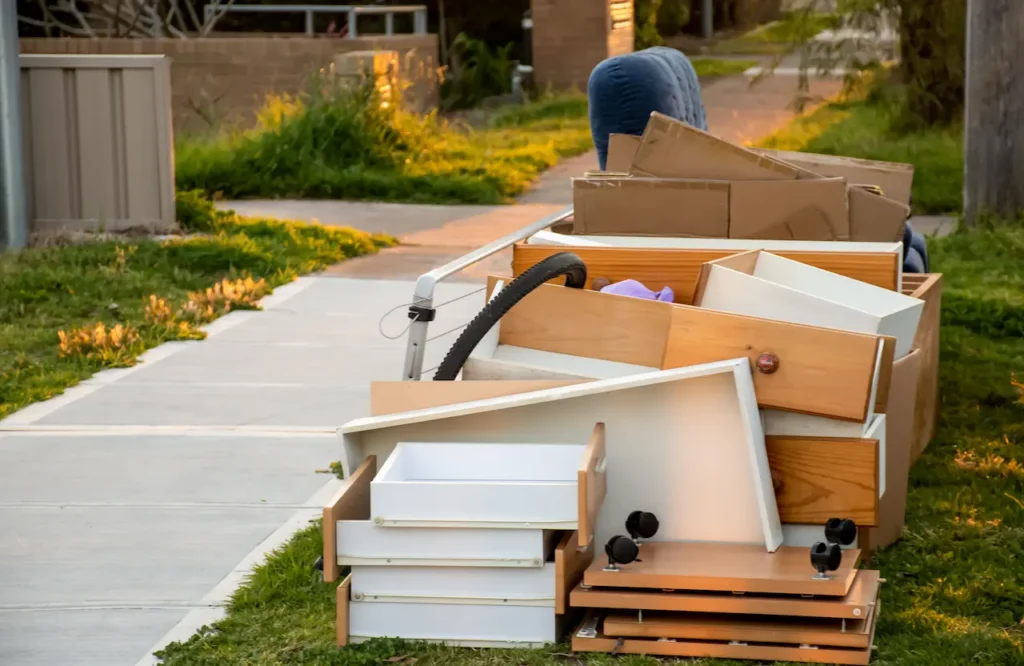
Need to clear out furniture first? Our guide to junk removal in Austin compares nine local companies, along with donation and city pickup options.
What Texas Law Requires Before a Tenant Moves In
A few make-ready items are required by the Texas Property Code:
- Rekey for every new tenant. Section 92.156 generally requires the landlord to rekey the locks by the seventh day after each new tenant moves in. That window covers only the rekey, so have the other devices in place before move-in.
- Install the required security devices. Section 92.153 requires latches on exterior windows and a keyed deadbolt or doorknob lock on exterior doors. Each exterior door also needs a keyless bolting device and a door viewer. Sliding glass doors need a pin lock plus a handle latch or security bar.
- Place smoke alarms correctly. Section 92.255 calls for one in each bedroom, one in the hallway serving the bedrooms and one on each level.
Inside Austin city limits, city code also requires carbon monoxide alarms in homes with gas or fuel-burning appliances or an attached garage connected to the home. Alarms generally go outside each sleeping area, plus inside a bedroom when it or its bathroom has a fuel-burning appliance, as the home's layout requires. We follow the same rule outside Austin, and we require a fire extinguisher in every home.
The first time we bring a home up to code, the locksmith work usually costs $200 to $750. After that, most turnovers need only the rekey. We rekey every home to our key system when we take it over, so please don't change the locks yourself. Our licensed locksmith documents the work, so only the new tenant has keys.
Not sure where you stand? Ask yourself: is your property legally rent-ready? Our guide to Texas property code compliance covers the rest.
This section is general information, not legal advice.
How the Make-Ready Process Changes After the First Tenant
The make-ready process has two stages. The first time a home becomes a rental, the work goes deeper. After that, each turnover resets the home and documents its condition.
| Task | First time renting the home | Every turnover after |
|---|---|---|
| Inspection | Full inspection while the home is empty | Move-out walkthrough to list repairs |
| Plumbing | New shut-off valves, a pressure regulator check and steel braided washer hoses | Check for slow drains and rusty valves |
| Water heater | Check its age, venting and installation. Most last about 10 years, so consider replacing an older unit, especially one showing wear or leaks | Check for leaks |
| Main water shut-off | Make sure it turns without tools | Show the new tenant where it is |
| Locks and code items | Bring every device up to code, then rekey | Rekey |
| Paint and floors | Fix anything below our standards | Touch up, repaint or replace as needed |
In our experience, the first pass saves owners the most money later. Rubber washer hoses can start leaking after about five years, and an aging water heater will leak sooner or later. Both cost far less to replace in an empty house than to fix after a flood. We also suggest leaving a garbage disposal wrench, so tenants can clear jams themselves.
If this is your first rental, start with our guide to renting out your house for the first time.
Rental Property Renovations Worth Doing During a Make-Ready
Paint and flooring are the two biggest costs in most make-readies, so that is where smart rental renovations pay off. When you are renovating a rental property, remember one rule: you are running a business, not designing your forever home.
Kitchens: Make it Work Before You Make it New
Skip the full remodel. Renters care most that the kitchen is clean and everything works, and we have leased many homes with older kitchens. Instead of replacing damaged cabinets, sand and paint them, then add new hardware. If you spend real money anywhere, put it into durable countertops.
Paint
Use a neutral white or off-white. In our experience, homes with bold or dated colors sit longer and rent for less. We use Sherwin-Williams, and a good paint job lasts 5 to 10 years in a rental. Also, add door stoppers, since a $10 stopper prevents a $250 hole in the wall.
If the home was built before 1978, repairs that disturb painted surfaces may fall under the EPA’s Renovation, Repair and Painting Rule. Covered work must be done by a certified firm using lead-safe practices.
Flooring
Carpet lasts about five years in a rental, and cheap 20-ounce polyester may last only one or two. Nylon lasts longer, but it costs more up front.
For most homes, we recommend glue-down luxury vinyl plank (LVP). If one plank is damaged, you replace that plank, not the whole room. LVP can cost up to half as much as hardwood, and it lasts 15 to 20 years. Best of all, our local flooring partners stock common products, so turnovers don't wait on supply.
Fixtures and blinds
Our standards call for 2-inch blinds on every exterior window, and we suggest white faux wood. In addition, match light fixtures from room to room so the home looks finished in photos.
Curb appeal
Curb appeal decides whether renters ever walk inside. Start with the basics: mow, trim, mulch and power wash. Each step also protects the home:
- Trim branches off the roof, because they give rodents a path inside.
- Clear wet leaves, which hold water against the house and lead to mold.
- Keep shrubs below the windows, so no one can hide in front of them.
- Plant perennials instead of annuals, since they bloom longer and need less care.
To plan for these costs, see our guide to budgeting for repairs.
How Long a Make-Ready Takes and What It Costs
A make-ready usually takes two to three weeks when one team runs it. Our own numbers show what happens when more people get involved.
| Quarter | 1836 ran the make-ready | Owner or owner’s project manager involved |
|---|---|---|
| Q1 2025 | 13 days | 30 days |
| Q2 2025 | 18 days | 24 days |
| Q3 2025 | 17 days | 30 days |
These are quarterly averages from our stats page. In every quarter we have tracked since 2022, homes with an owner involved took longer. Owners who bring their own vendors, collect several bids or do repairs themselves add days to every rental turnover. In the end, those days usually cost more than the money saved.
What a make-ready costs
Holding costs are usually the biggest line. Mortgage, taxes, utilities, management fees and lost rent typically add up to $100 or more per empty day. At that rate, the 17-day gap in the first quarter of 2025 cost those owners about $1,700. So saving $300 on a repair is no bargain if it adds a week of vacancy.
The work itself depends on the home. These are the make-ready costs we see most:
- First-time code work: $200 to $750 for the rekey and any missing security devices. This covers compliance only, not the full make-ready.
- Professional cleaning: arranged by us with no upcharge.
- A full tenant turnover: in a 2022 analysis, we estimated $1,000 to $5,000, including cleaning, repairs, marketing and lost rent. Actual make-ready costs depend on the home’s condition and the work needed.
Waiting costs more, too. We have seen a small roof leak, left too long, turn into a caved-in ceiling and thousands in repairs. Meanwhile, homes that meet our standards lease about 25% faster than average. For the full math, see what vacancy actually costs.
Move-In Day: Photos, a Walkthrough and a Three-Day Window
The last step on any tenant turnover checklist is proof of the home's condition:
- Photograph every room after the cleaning and before handing over keys.
- Walk the home with the tenant on move-in day, and note any cosmetic issues.
- Give the tenant three days to report anything you both missed. Your lease should spell out this window.
These records show what changed during the lease, which is how you tell wear and tear vs damage at move-out. After that, our move-out checklist shows residents how to hand the home back.
Make-Ready Process FAQs
How long does a make-ready take?
In 2025, onboarding make-readies averaged 13 to 18 days when our team ran the full process. With an owner or outside project manager involved, they took 24 to 30 days.
How much does a make-ready cost?
In a 2022 analysis, we estimated a full tenant turnover at $1,000 to $5,000, including cleaning, repairs, marketing and lost rent. Actual make-ready costs depend on the home's condition and the work needed. Holding costs add $100 or more per empty day, so speed matters as much as price.
Do I have to rekey between tenants in Texas?
Generally, yes. Texas Property Code Section 92.156 requires landlords to rekey by the seventh day after each new tenant moves in. We rekey through a licensed locksmith for every new tenant.
Should I replace the carpet or clean it?
Clean it if it is in good shape, since carpet needs a professional cleaning before every tenant anyway. Once it is worn or stained, replace it with glue-down LVP, which lasts 15 to 20 years.
Is it worth renovating the kitchen?
Usually not. A clean kitchen where everything works rents well. Instead, paint damaged cabinets, update the hardware and, if you spend anywhere, choose durable countertops.
Can I do the make-ready work myself?
You can, but it often costs more than it saves, because DIY work and outside bids add days. If we manage your home, talk with your property manager before hiring outside vendors, and leave locks to our licensed locksmith.
Who pays for what during a make-ready?
The owner pays for the make-ready and for normal wear and tear, since Texas law bars deducting normal wear and tear from a deposit. Tenants may owe for damage beyond normal wear and tear. We also require them to return the home professionally cleaned.
Let Us Run Your Next Make-Ready
Getting your rental ready for its next tenant shouldn’t mean juggling contractors, chasing estimates, and losing weeks of rental income. At 1836 Property Management, we coordinate the entire make-ready process, from inspections and repairs to final cleaning and preparing your property for the market. Our goal is to help you avoid unnecessary delays, control costs, and get your Austin rental ready for its next tenant.
Ready to put our experience to work? Schedule a call with our team or explore our property management pricing to see how we can help.