





At 1836 Property Management, we've managed rental properties across Texas since 2006, and we’ve seen it all. One of the most unexpected, yet common, crises landlords face is sudden water damage. And while water damage can be caused by many sources, it is not uncommon for it to be caused by tenants. We’ve helped hundreds of landlords understand their rights and responsibilities when dealing with water damage caused by tenant negligence so that they can mitigate the damage effectively and safely.
As a leader in Austin, Texas property management, we handle these scenarios every day. With 20 years of experience in Texas, local teams across the state, and licensed real estate professionals managing properties across Texas, we know the ins and outs of Texas laws and regulations that protect both landlords and tenants when dealing with water damage.
This guide breaks down what water damage is, who is responsible for it, what landlord or renters insurance covers, and how landlords can address water damage promptly.
Table of Contents
- Understanding Property Damage Caused by Water Leaks
- What is Water Damage?
- What Are Key Signs of Water Damage?
- How is Water Damage Different Than Flood Damage?
- What is a Water Leak?
- Is Water Damage Dangerous?
- Who is Responsible for Water Damage: Landlord or Tenant?
- Is the Landlord Responsible for Water Damage?
- Landlord Responsibility for Flood Damage
- Key Aspects of Tenant Negligence and Water Damage
- What Can Tenants Be Held Responsible For?
- What if the Tenant Did Not Report the Water Leak?
- Comparative Negligence: What if the Tenant and Landlord Are Both at Fault?
- What Insurance Covers
- Does Landlord Insurance Cover Water Damage?
- Does Renters Insurance Cover Water Damage?
- Steps to Take If Water Damage is Caused by a Tenant
- Frequently Asked Questions
Understanding Property Damage Caused by Water Leaks
What is Water Damage?
When water enters areas of your property where it should not be and causes property damage, that is considered water damage. It can be caused by many different things, but the most common causes of water damage are:
- Tenant negligence
- Floods
- Broken pipes
- Appliance malfunctions
- Plumbing leaks
- Condensation
- Poor drainage
- Leaking roof
- HVAC system issues
There are three categories of water damage:
| Category 1 | Clean or Potable | Water from a sanitary source that poses minimal health risks |
|---|---|---|
| Category 2 | Grey water | Water used in the bath, shower, or sinks that have some contaminants and may cause illness if ingested. |
| Category 3 | Black water | Although it does not look different than grey or potable water, black water can pose a huge health risk. Black water is any water that contains fecal matter, chemicals, parasites, or other bacterial contamination. |
What Are Key Signs of Water Damage?
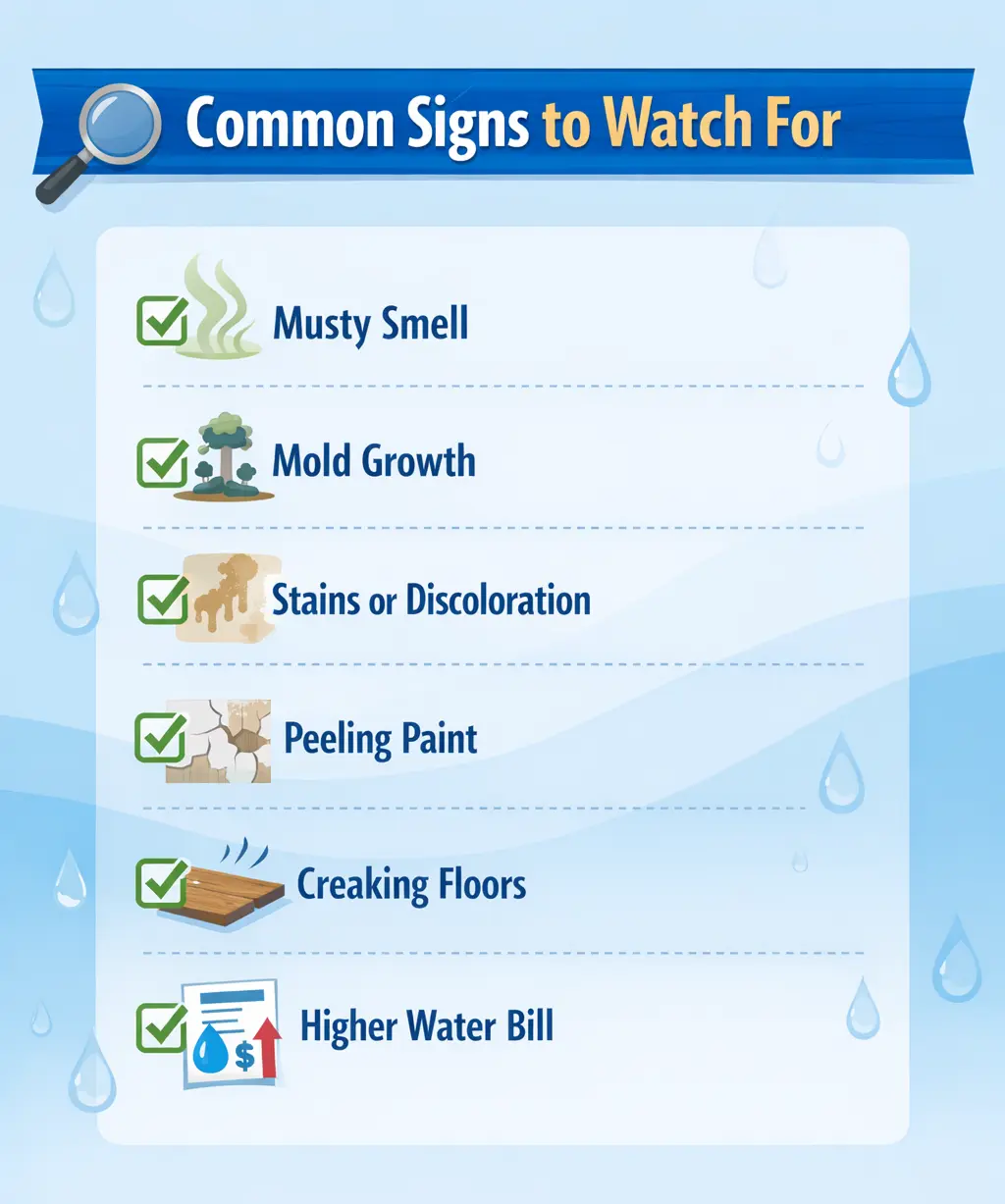
Water damage isn't always obvious, but that doesn’t mean it’s not there. It’s not uncommon for water damage to silently build up into a much larger issue that can ultimately lead to an expensive and consuming problem. It’s important to know the signs of water damage so that you can spot them early on and address them. Sometimes tenants don’t report water damage right away because they don’t know the signs, either. But if you’re familiar with these key signs, you can spot them during inspections or let your tenants know what signs to look out for.
The key signs of water damage are:
- Musty smells with no clear source
- Mold growth
- Cracks in walls
- Peeling wallpaper and paint
- Staining and discoloration
- Creaking floorboards
- Higher water bills than usual
- Rust or corrosion
How is Water Damage Different Than Flood Damage?
The main difference between water and floor damage is the source of the water. Water damage is caused by an internal source, like a pipe burst. Flood damage is caused by water from external sources, such as heavy rain, storm surges, or tidal waters. In Texas, flood damage requires a separate type of insurance, flood insurance, and is not covered by standard homeowners or renters insurance.
What is a Water Leak?
A water leak is the accidental or unintentional release of water from pipes, tanks, or plumbing fixtures caused by cracks, corrosion, or high pressure. Water leaks can be the first silent cause of larger water damage. The signs are similar, but more subtle. The most common signs of water leaks are spikes in the water bill, damp spots or discoloration on walls and floors, sounds of running water, and musty smells.
Is Water Damage Dangerous?
Water damage doesn’t always present itself as an obvious emergency, but it doesn’t take much to escalate into one. If left unattended, water damage can and will certainly lead to hazardous health risks for you and your tenants. You can assess the severity of these risks based on the extent of water damage, the water source, and the speed at which the problem is mitigated.
In Texas, the climate poses unique water-damage risks. For example, high humidity and heat in Texas allow mold to form within 24-72 hours of water intrusion! In the winter, severely low temperatures can cause pipes to freeze and burst. In both scenarios, water damage can quickly lead to more extensive structural damage on your property, ruin property foundations, cause toxic indoor air and respiratory issues, and pose electrical hazards. To prevent the dangers associated with water damage, we recommend taking prompt action to address the underlying cause.
Who is Responsible for Water Damage: Landlord or Tenant?
According to Texas law (Section 92.052), landlords are required to quickly and diligently repair a problem or condition that “materially affects the physical health or safety of an ordinary tenant.” For this law to apply, the tenant must be current on rent and provide proper written notice to their landlord of the issue.
Is the Landlord Responsible for Water Damage?
If water damage develops from normal use, the landlord is responsible for repairs once they receive proper notice from their tenant. This includes normal use of the property, which might lead to sewage or plumbing leaks and even caved-in ceilings. In Texas, if the repair is not made, tenants may have the right to terminate their lease or to make repairs and bill their landlord.
A common question we get asked is, “*Whose belongings are covered in the event of water damage?”* Texas law states that landlords are not automatically liable for tenant belongings in the case of water damage. However, if there is damage or loss of property as a result of the landlord's negligence, tenants could sue, and those losses would be covered by the landlord’s liability insurance.
However, if the water damage was caused by the tenant (or one of their guests or anyone else living in the unit) and was not due to normal wear and tear, the landlord is not held responsible. We discuss examples of when tenants would be liable for water damage in our future section: Key Aspects of Tenant Negligence and Water Damage. In the case of tenant negligence, landlords are not required to cover damage or loss of the tenant’s property.
Landlord Responsibility for Flood Damage
Since January 1, 2022, Texas law has stated that all new residential leases must contain a flood risk disclosure that discloses two things: (1) whether the property/unit is in a 100-year floodplain, and (2) whether the property has flooded in the past five years. This disclosure must be provided at or before the time of signing the lease.
Generally, for flood damage that affects tenant health or safety, landlords are responsible for flood damage. Texas law requires that landlords repair conditions within 7-30 days, depending on the severity, and includes repairs to walls, floors, ceilings, plumbing, electrical, HVAC, and any fixtures in the rental unit.
Key Aspects of Tenant Negligence and Water Damage
While Texas doesn’t have a formal definition for tenant negligence, we can describe it using the Texas Property Code and general common law principles. Under Texas common law, tenant negligence means that the tenant failed to take reasonable precautions that directly led to water damage. This includes things like failing to use and maintain rental property appropriately.
Key examples of tenant negligence that cause water damage can include, but is not limited to:
- Ignoring water leaks or failure to shut off water valves
- Ignoring mold growth
- Inappropriately using plumbing systems, like flushing non-flushable items
- Turning off the heat in winter, which can lead to pipes bursting or freezing
- Overflowing a bathtub or sink
- Leaving windows open during a storm
- Waterbed damage and improper maintenance
- Failure to report a known plumbing issue promptly
What Can Tenants Be Held Responsible For?
If the water damage was caused by negligent tenants, landlords can hold the tenant responsible for:
- All costs of repairs
- Deductions from security deposit
- Additional damages exceeding their security deposit
What if the Tenant Did Not Report the Water Leak?
If a tenant does not report a water leak properly or promptly, they can be held liable for any subsequent damages to the property. In these cases, landlords will need to show convincing evidence that the water damage was obvious and evident to the tenant and they still failed to report it.
However, if the water leak or water damage is in areas that are not reasonably accessible or visible, tenants are not held liable for reporting it. It’s simply not feasible to hold them responsible for water damage they cannot see, hear, or smell.
Comparative Negligence: What if the Tenant and Landlord Are Both at Fault?
Texas holds a *comparative negligence standard*. This means that by law, both the landlord and the tenant can be found liable for water damages based on their degrees of fault, but with a 50% threshold that cuts both ways. Texas courts will evaluate all facts, evidence, and each party’s contribution to the water damage and determine who is at fault and assign a percentage of liability. Factors used to assess how much a tenant is at fault:
- Whether the tenant knew about the leak and failed to report it
- Whether the tenant caused or made the water leak worse through misuse
- Whether the tenant failed to take quick steps to solve the problem, such as shutting off water valves or reporting it
Factors used to assess how much a landlord is at fault:
- Whether the property had a pre-existing defect or issue ignored by the landlord
- Whether the landlord had been told of water-related issues before the incident
- How often the landlord ran inspections on the unit
- Whether lack of attention and due diligence by the landlord made the water leak or damage worse
In these cases where both the tenant and landlord are held liable, the courts may require they split the costs 50/50 or even 40/60.
What Insurance Covers
Does Landlord Insurance Cover Water Damage?
Landlord insurance in Texas can provide coverage for certain types of water damage, but this coverage depends on the specific policy and the cause of the water damage.
Scenarios causing water damage that are usually covered by landlord insurance include broken water heaters, burst pipes, appliance malfunctions, or sudden roof leaks. If tenants can’t live in the unit while the repairs are being done, landlord insurance will usually cover both the structural repairs and the lost rental income.
In cases where the tenants are found liable for water damage in an accident, landlord insurance will cover damages. If tenant negligence is gradual and over an extended period of time, landlord insurance will not always cover the damages because they can be deemed preventable and caused by negligence.
Things not covered by landlord insurance include, but not limited to (depending on the policy):
- Flooding, rising water, or storm surges will often require a separate flooding insurance policy.
- Neglect and slow leaks
- Sewer and water backup requires an insurance add-on and isn’t automatically covered
- Mold
Does Renters Insurance Cover Water Damage?
Standard renter’s insurance covers sudden, accidental water damage, but it does not cover flood damage or structural repairs to walls, floors, and ceilings from water damage.
As Texans, we are used to frequent storms and flooding, and always recommend that tenants carry both renters insurance and a separate flood insurance to protect them from unforeseen damages and costs out of their control.
Things covered by renters insurance usually include:
- Burst pipes
- Overflowing toilets
- Broken washing machines
- Overflowing or broken dishwashers
- Roof leaks from wind or after a storm
- Temporary living expenses may sometimes be covered
- Personal belongings such as clothes, furniture, and electronics
Things NOT covered by renters insurance usually include:
- Flooding, hurricanes, or rising water
- Slow leaks
- Seepage
- Mold from neglected water damages
- Any sort of negligence
- Sewer backups, unless added to insurance separately
Steps to Take If Water Damage is Caused by a Tenant
Once you understand what constitutes water damage and how to determine whether your tenant is liable, we recommend acting quickly to mitigate any damage to your property. Here’s a practical step-by-step guide.
- Stop the water damage immediately!
- Document everything.
- Determine and collect evidence for negligence.
- Create an itemized list of expenses and deductions to be deducted from the tenant’s security deposit.
- If not taken from the security deposit, bill the tenant for damages. If the costs exceed their security deposit, you should bill the tenant the remaining amount. We recommend that you provide a written document and a demand for payment that includes a description of the damage; proof such as photos or videos; itemized costs and total cost; and a clearly defined deadline to pay.
- File a claim. File with your insurance as soon as possible to determine whether your policy may cover some of the damages. If the tenants don’t agree to pay even though they are liable; you can take them to small claims court. The limit in Texas for small claims is $20,000.
- Prevent future issues by adding a clear clause to your leases stating that tenants must report leaks immediately, must have renters' insurance, and outlining how your inspections will be made.
Frequently Asked Questions
What is considered tenant negligence in Texas water cases?
Texas considers tenant negligence to include not reporting a leak in a timely manner or at all, not using plumbing properly, leaving water running and overflowing, or ignoring signs of water damage.
How do you prove tenant negligence for water damage?
Landlords should have proof that the water damage was visible to the tenant with photos, videos, maintenance records, their inspection reports, and communications with the tenant.
What is comparative negligence in Texas?
Comparative negligence is when two parties, not just one, are found liable. In this case, both the tenant and landlord could be found liable for water damage and instructed by the court to pay accordingly.
Does landlord insurance cover tenant-caused water damage?
Landlord insurance may cover sudden water damage, but insurers may deny claims if the damage resulted from preventable tenant negligence.
Is a tenant responsible for not reporting a water leak in Texas?
Yes, tenants are responsible and can be held financially liable for water damage if they didn’t report a known water leak.
How long does a landlord have to fix water damage in Texas?
This depends on the severity of the damage. A reasonable time is considered to be between 7 to 30 days. Things to consider include the safety and health concerns of tenants or nearby residents, cost, and immediate structural hazards if left unattended.
Can a landlord enter a property for water damage repairs without notice in Texas?
In emergencies like active water damage, landlords can usually enter without prior notice to prevent further damage.
What should landlords do immediately after tenant-caused water damage?
Stop the source of the water leak, document the damage, begin repairs, notify insurance, and determine tenant liability.
Can water damage from an overflowing bathtub be considered negligence?
Yes, overflowing a bathtub or sink is commonly considered tenant negligence because it is preventable.
Who pays for mold caused by water damage in a rental property?
Responsibility depends on what caused the mold in the first place. If mold results from water damage or leaks as a result of tenant negligence, the tenant may be liable. If due to structural issues, the landlord is typically responsible.